
Nothing to see here
Lieutenant James Cook took possession of the east of New Holland for King George III, thereby setting the doctrine of Terra Nullius, ‘empty land’, in spite of seeing peoples’ fires all the way up the east coast, interacting with the Guugu Yimithir when beached to repair the Endeavour, and commenting that they were “Far more happier than we Europeans”. Terra Nullius was dismissed by the High Court in the 1992 Mabo decision.
Endeavour
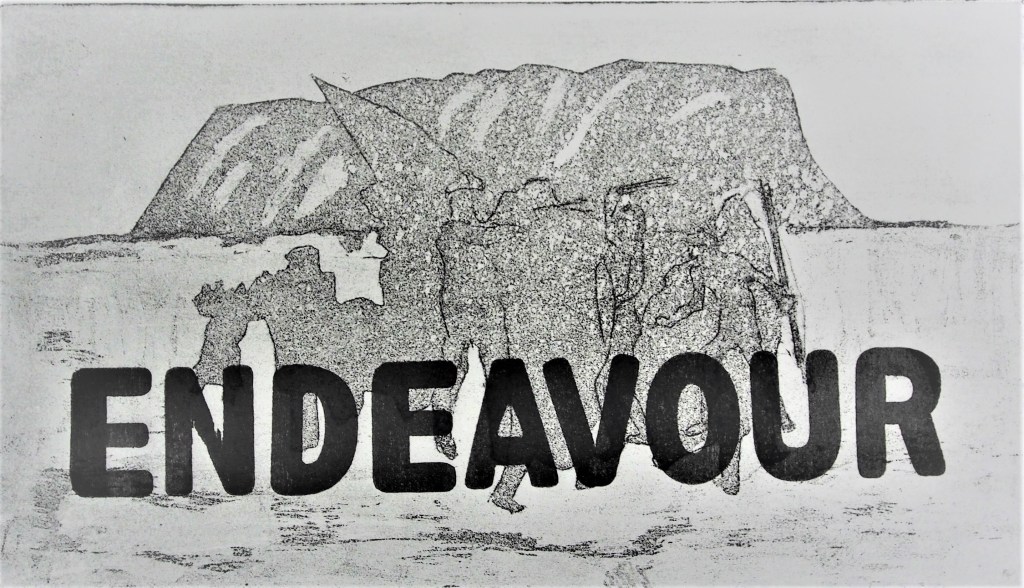
Lieutenant James Cook and the crew of the Endeavour landed at Kamay which Cook named Stingrays Harbour and is now known as Botany Bay amid the country of the Bidjigal, Gweagal and Kameygal. The two warriors in the middle distance of the E Phillips Fox history painting of the landing have been moved forward in this etching. Cook shot one and took his shield and other weapons. The shield is in the British Museum.
Renaming
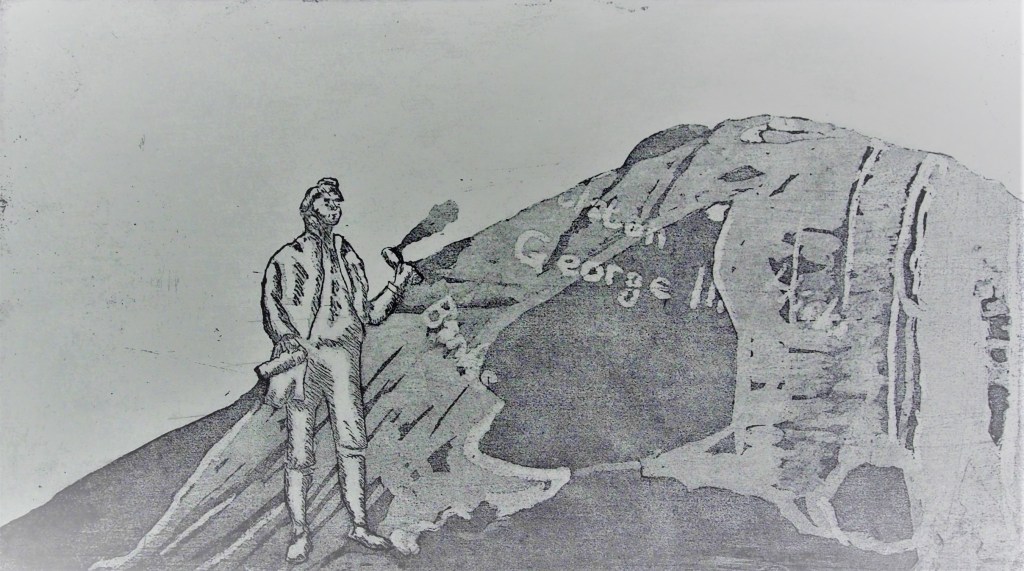
In the tradition of colonisers, Cook sprayed new names along the east coast, replacing time honoured and culturally rich names with those of patrons, shipmates and locations in the British Isles. The new names erased the past, in ignorance or deliberately, and even Indigenous names adopted a settlement progressed were often mangled or used inappropriately.
The Wave
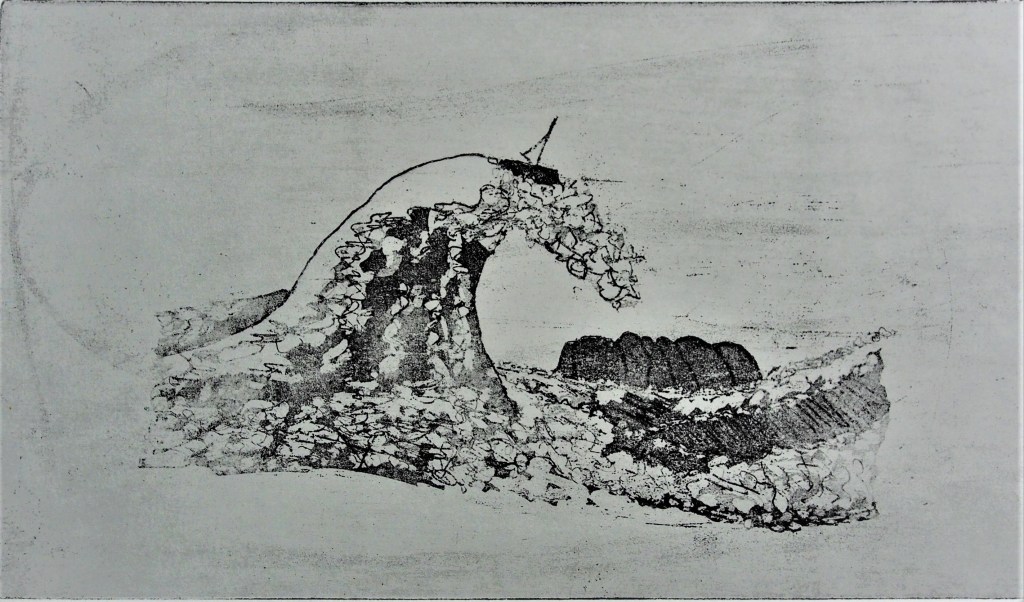
The only etching in this series that directly references those of Hokusai, this metaphoric wave recalls the colonial invasion that swept across the Australian continent and islands as a deadly physical and cultural tsunami.
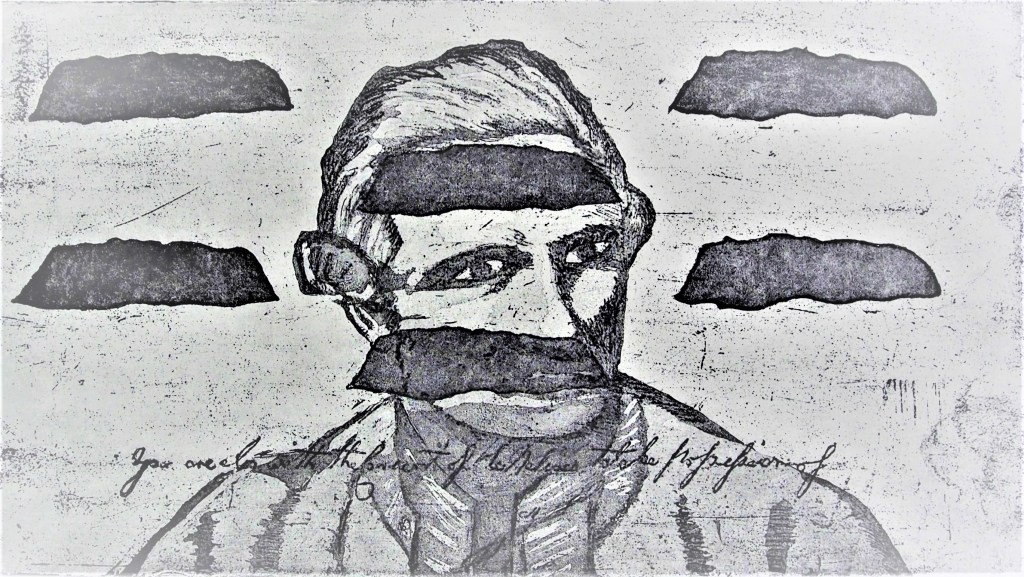
With the Consent of the Natives
Cook’s ‘secret instructions’ bade him “… with the Consent of the Natives to take Possession of Convenient Situations in
the Country in the Name of the King of Great Britain: Or: if you find the Country uninhabited take Possession for his Majesty by setting up Proper Marks and Inscriptions, as first discoverers and possessors”. No attempt was made to seek consent.
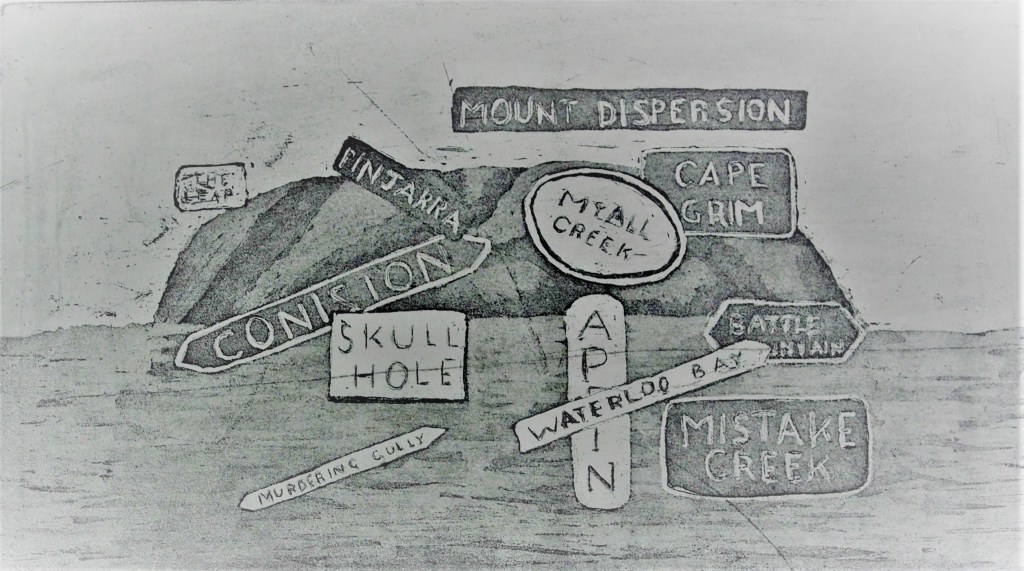
Dispersal
From Cook’s shooting of a warrior at Kamay/Botany Bay to the bloody massacres that characterised the colonisation of Australia up to those at Coniston in the Northern Territory in 1928, the invaders were committed to ‘dispersal’ of the traditional owners of lands wanted for grazing, mining or settlement. The sites of dispersion are often unlabelled signposts on the nation’s highways.
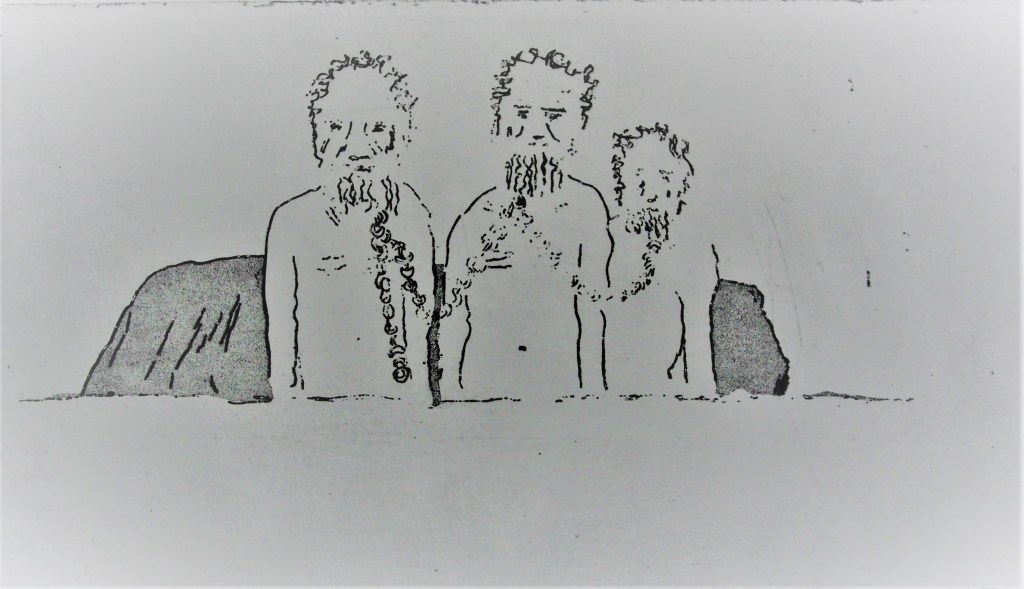
<Untitled>
Men, women and children were removed from their lands in chains, sometimes for alleged attacks on settlers or their stock, sometimes to ‘clear’ the lands and often to humiliate the elders and destroy language and culture. Their removal broke, often irreparably, generations of intimate knowledge of the lands.
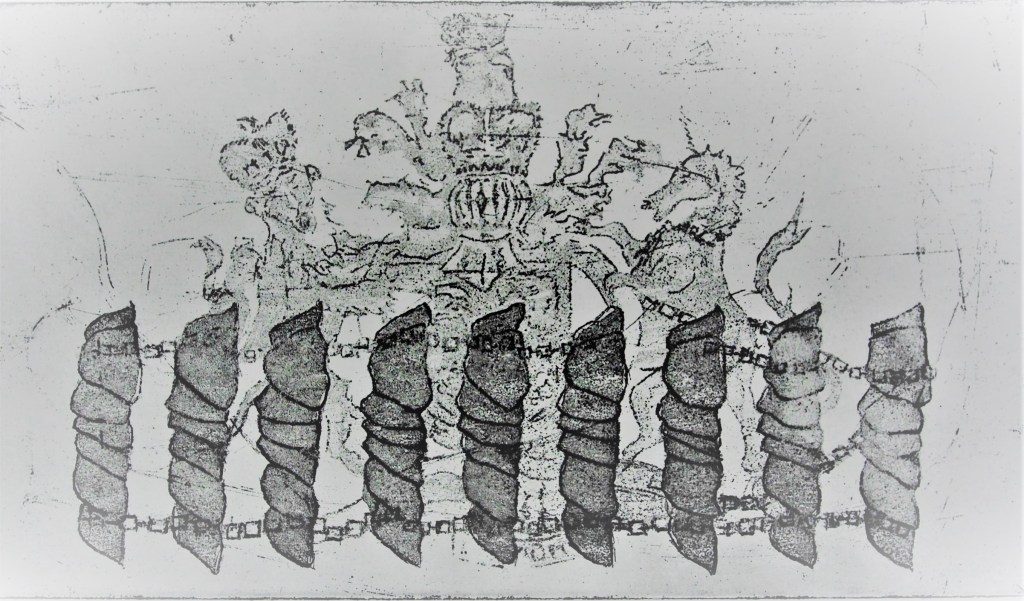
Majesty
Settlement was carried out in the name of the Monarch of Great Britain, declaring the lands of the traditional owners to be ‘Crown land’ which could be granted or sold to the invaders. Traditional owners were ‘dispersed’ and fenced out. Land so alienated is not available for native title claims today.
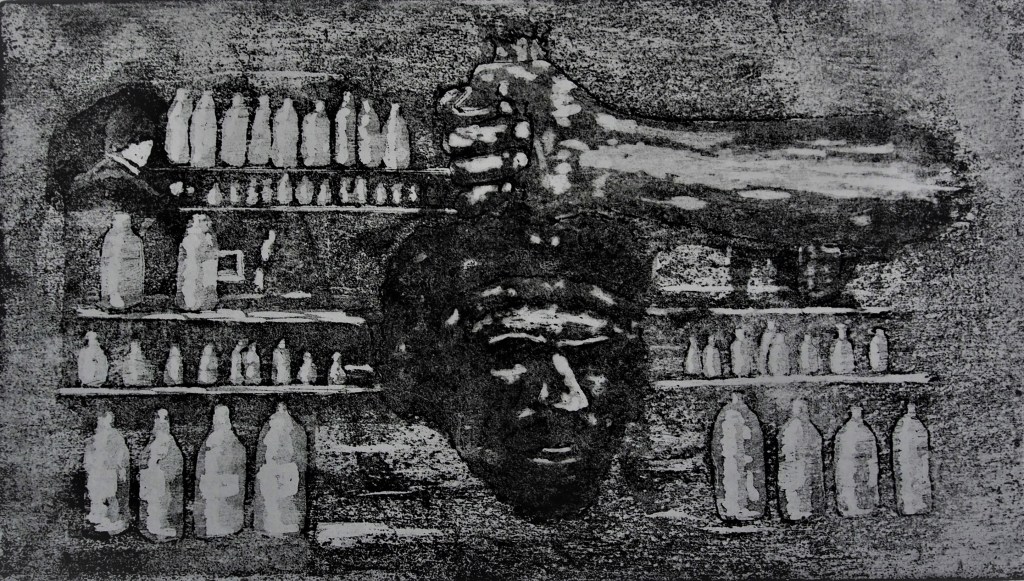
Pemulwuy
A powerful Bidjigal resistance leader, Pemulwuy was described by Governor Philip Gidley King as ‘an active, daring leader of his people’. He led guerrilla attacks from Botany Bay west along the Georges River to Salt Pan Creek. On 2 June 1802, Pemulwuy was shot and decapitated, his head presented to Sir Joseph Banks in London. Many other Indigenous ‘specimens’ were similarly taken for ‘research’.
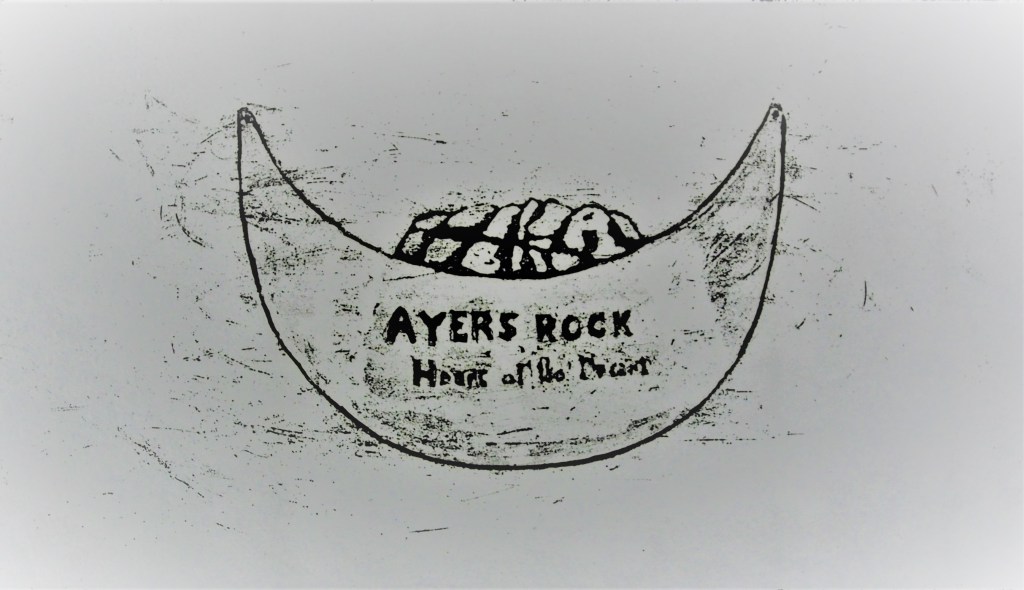
Heart of the Desert
‘King plates’, modelled on European military gorgets, were presented to Aboriginal individuals in gratitude for saving a life or similar services or to recognise or accord rank as a ‘king’ or ‘queen’, often cutting across cultural recognition of elders, sometimes to sow division deliberately or to cynically reward apparent collaboration.
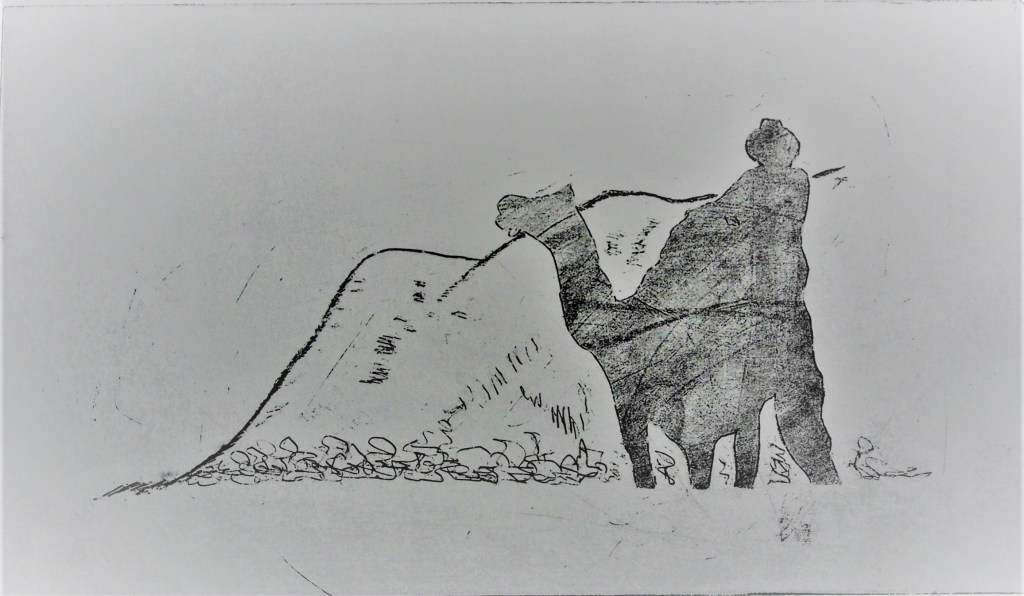
Discovery
From Cook, Australian historical narratives are punctuated with tales of explorers who ‘discovered’ coastlines, rivers, deserts and fertile regions often enduring considerable hardship and sometimes ending in tragedy or mystery. Their Aboriginal and Torres Strait Islander guides and informants are seldom credited.
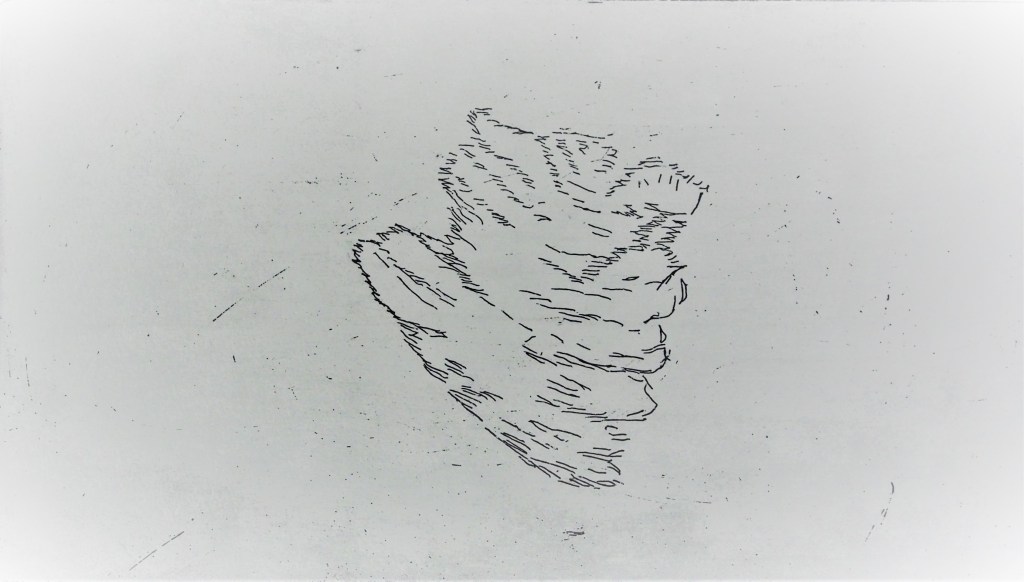
Our Heart
Located close to the geographical centre of Australia, Uluru is heart shaped when seen from the air. Our national omphalos in the ‘Red Centre’, it is symbolically the heart or spirit of the nation while holding much more reverence and importance for the Anangu who live around it.
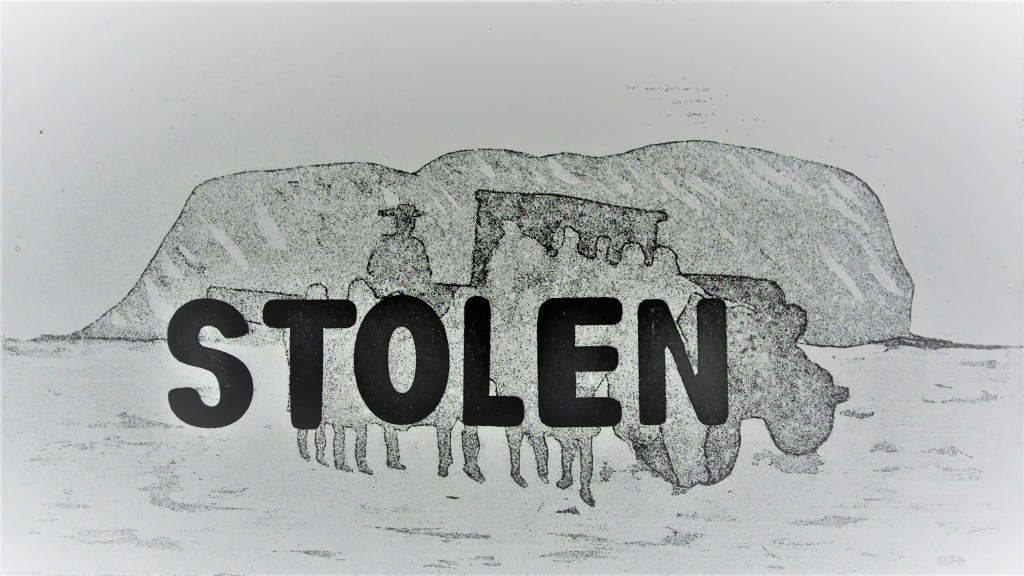
Stolen
From the earliest days of colonisation to the present day, Indigenous children from newborns to teenagers were removed from their families to be trained as workers, to assimilate and ‘breed out the black’, deny the use of language and transmission of culture, or for claimed child protection. Detailed in the 1997 Bringing Them Home report, these policies and practices created the Stolen Generations, intragenerational trauma and enormous cultural loss.
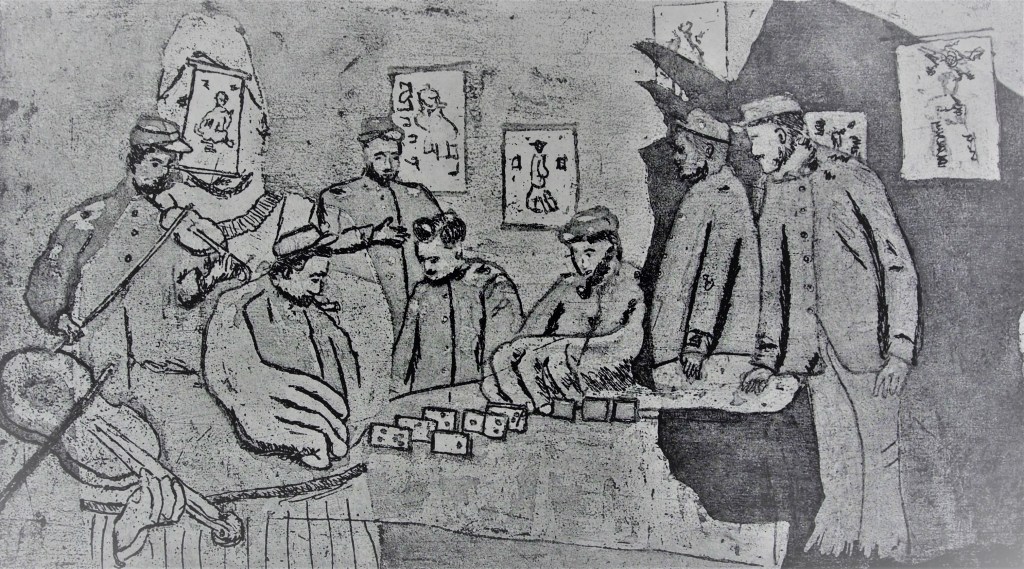
Native Police
The Native Police were a brutal military force that perpetrated many massacres on the frontier, especially across Queensland. Aboriginal recruits were dragooned from distant peoples and brutalised. This etching draws on an 1885 photograph taken in Cobar, NSW of a contingent relaxing with dominoes and a violinist below contemporary erotic images. The sole Aboriginal trooper is a bystander on the entertainment of the others.
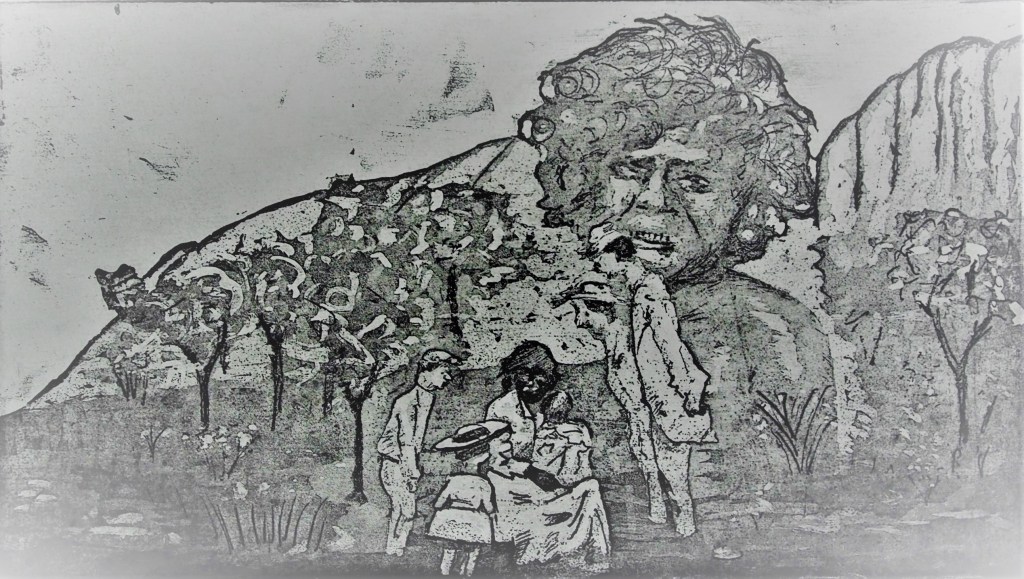
‘An Outcast in her own Country’
This aquatint draws on Phil May’s 1888 cartoon ‘A curiosity in her own country’ and Victor Lobb’s 1937 etching ‘The sadness of a dying race’, a reference to misleading claims that assimilationist policies – including removal of children, prohibition of language, denial of culture – were to ‘smooth the pillow of a dying race’.

Emu in the Sky
Recognised by peoples across Australia, the Emu in the Milky Way, called Gawarrgay/Gawarghoo by the Kamilaroi and Euahlayi in early summer, is of great spiritual and cultural importance. It is an element of the interrelatedness of the cosmos, earth and people.
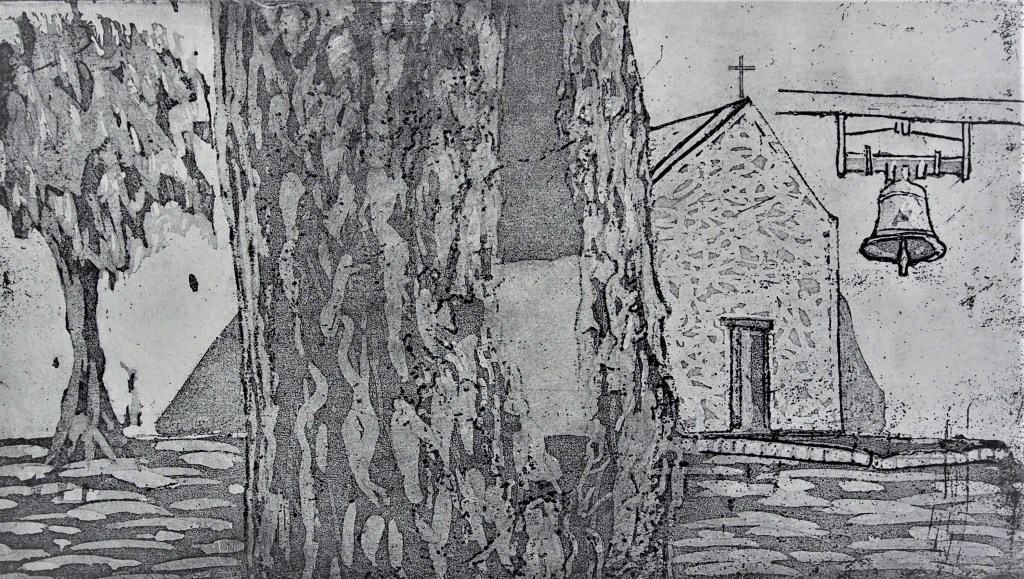
Belief
European colonisation brought Christian missionaries who sought to convert Indigenous peoples, destroy traditional beliefs and participated in the removal of peoples from their country. By them and others, cultural practices and speaking in language were forbidden, artefacts stolen, sacred sites despoiled and sacred carved and scar trees cut down.
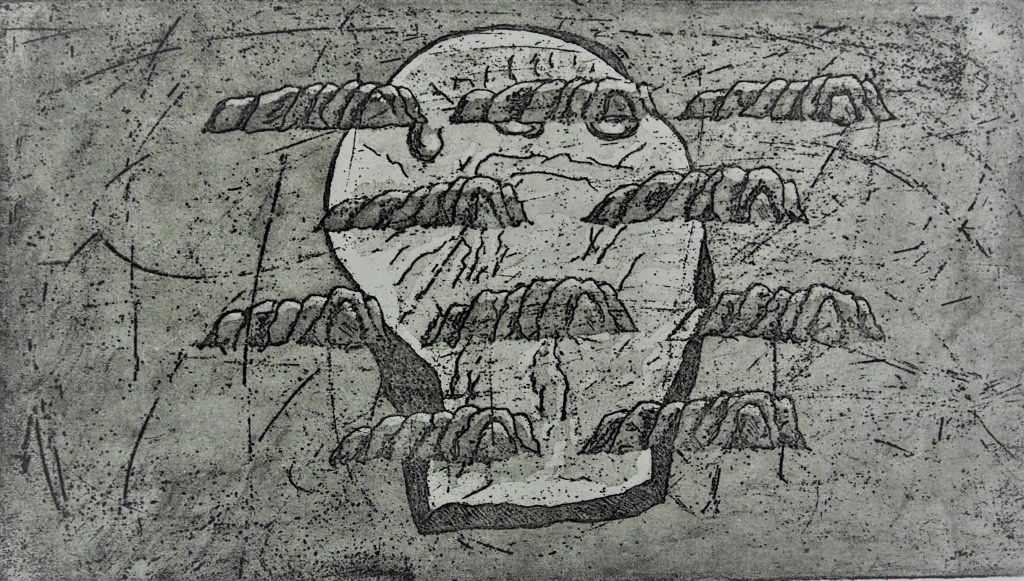
Pearling
Pearling on the northwest coast existed before colonisation with pearls and shell traded into the interior. After pearling became an industry ‘blackbirding’ provided slave labour of captured Aboriginal men and women. Pregnant women in particular were worked to death as they were believed to be able to absorb more oxygen and stay down longer, at depths of up to 13 metres.
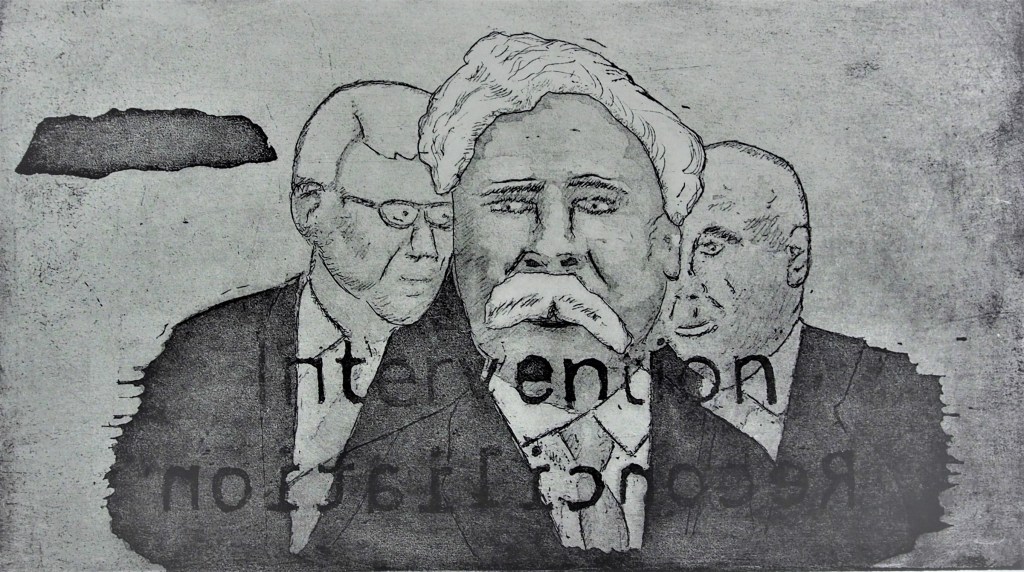
Remembering William Cooper
William Cooper, Yorta Yorta from Cummeragunja, was one of the leaders of the ‘Day of mourning’ on the 1938 sesquicentenary of colonisation, a strong voice for his people and a vigorous human rights advocate. His memory shames our political leaders with their mendacious ‘interventions’ and inability to respond appropriately to Indigenous resilience and generosity.
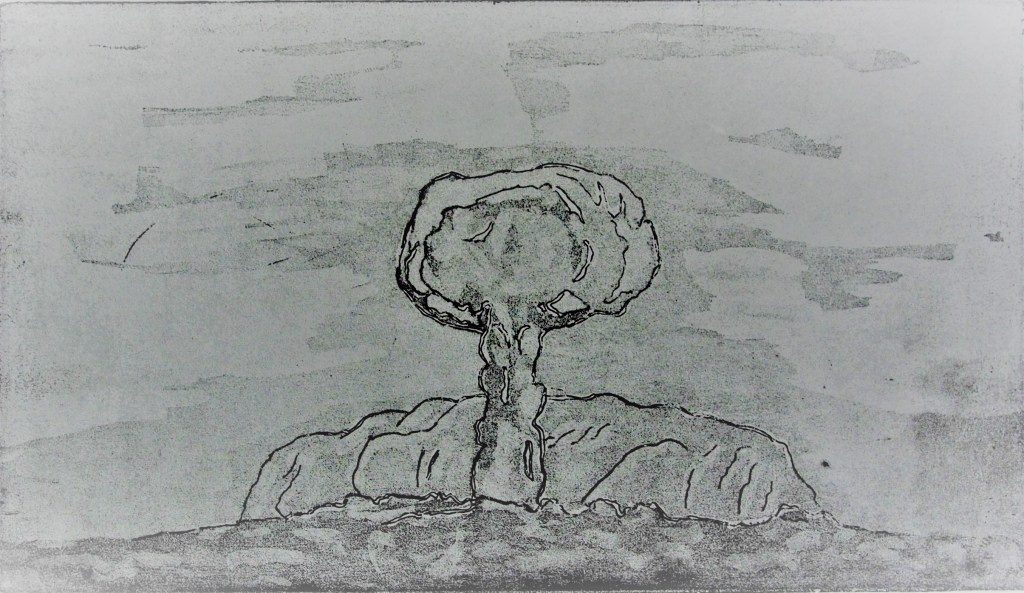
Maralinga
Anangu were forcibly removed from their country to make way for British atomic bomb tests in the 1950s and 1960s. Lingering radiation injured some and permanently excluded all from their lands.
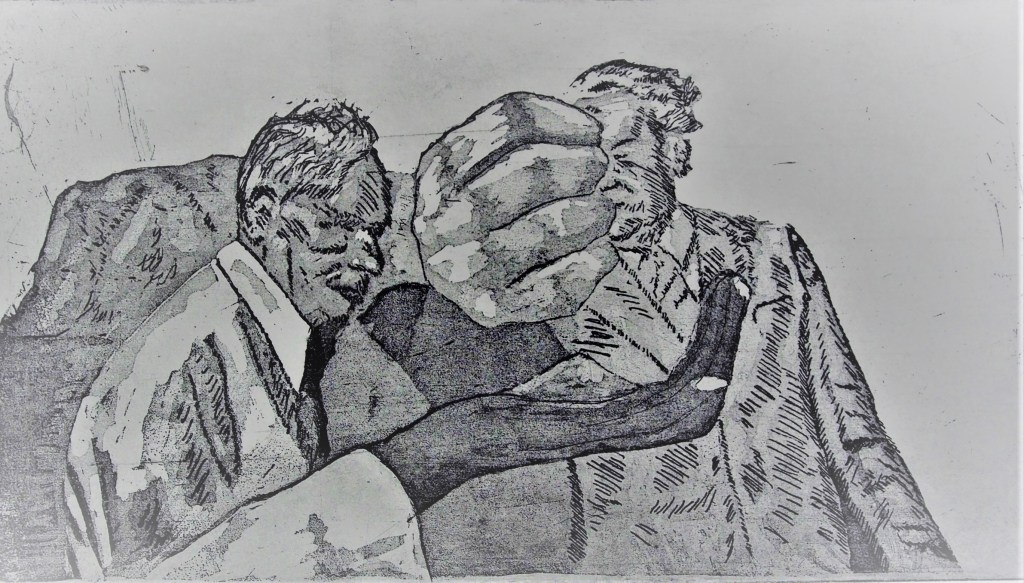
Returning
Recorded in Mervyn Bishop’s iconic photograph, Prime Minister Gough Whitlam at Daguragu in 1975 symbolically returning soil and the land to Vincent Lingiari who had led the long running protest of 200 Gurindji, Mudburra and Warlpiri workers. One of the landmark demands for return of land, its importance was underscored by the Mabo and Wik decisions but undermined by political resistance to enacting full blown native title legislation.
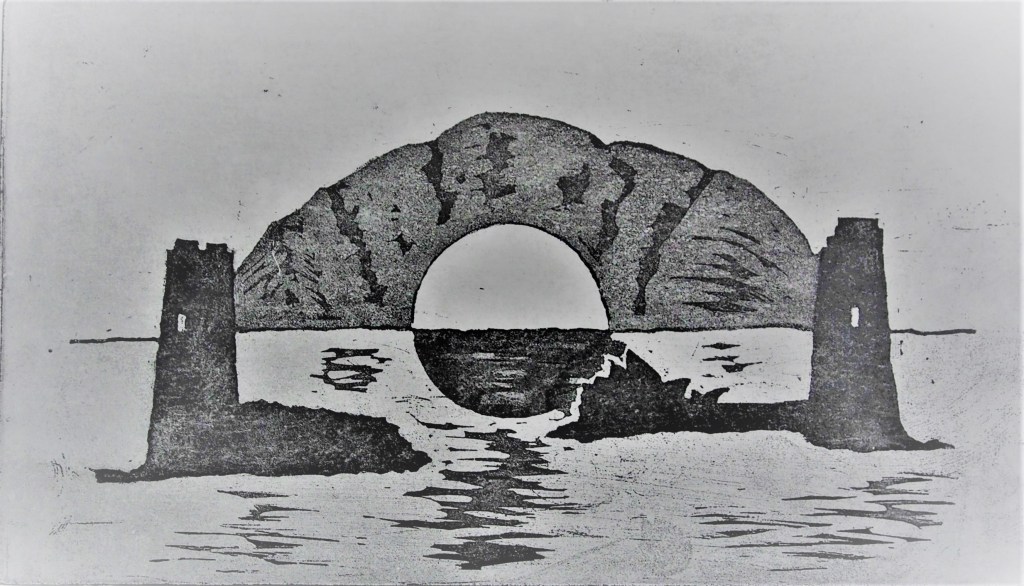
Safe Harbour
The first colonial governor, Captain Arthur Phillip, described Port Jackson (now Sydney Harbour) as ‘the finest harbour in the world [in which] a thousand sail of the line may ride in the most perfect security’. The Eora who lived around the Harbour and the surrounding plains were not as secure after the invasion.
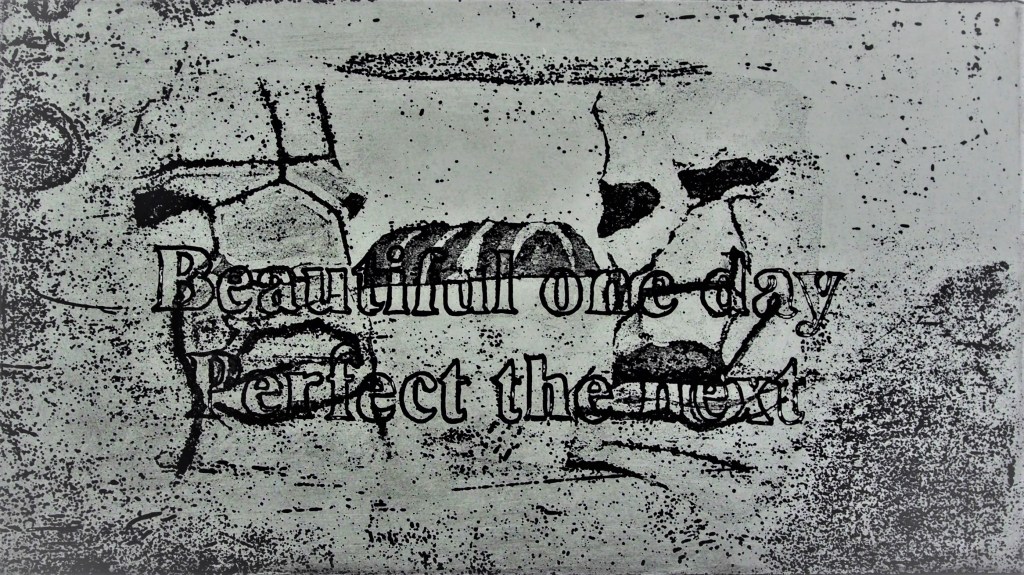
Cultural Tourism
Typical of many tourist sites, Cobbold Gorge, a beautiful and mysterious site on a North Queensland station, makes no reference to the Ewamiam people in whose lands it is located. Others, such as Mossman Gorge owned by the Kuku Yalanji, celebrate their heritage, attract the interest of visitors and provide Indigenous employment.
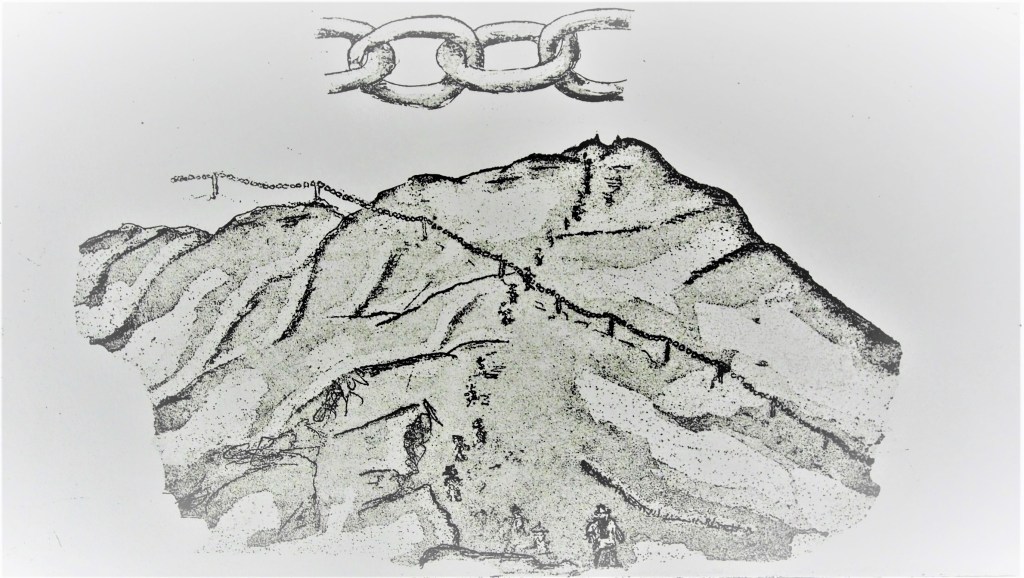
End of the Chain
The majesty of Uluru has attracted many Australian and international tourists to climb it as a ‘rite of passage’ contrary to the wishes of Anangu who wish its spiritual significance to be respected. Following a decline in the percentage of visitors who choose to climb, climbing was forbidden from 26 October 2019.
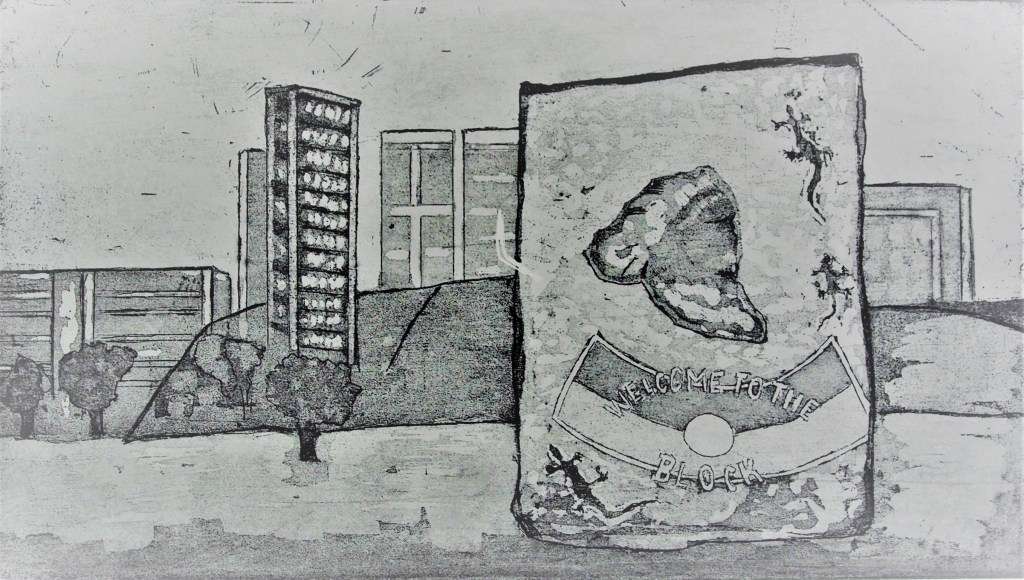
Welcome to the Block
Located in Redfern, the Block is owned by the Aboriginal Housing Corporation and has been symbolically and actually a major centre for Sydney’s Aboriginal population. A 24 storey student housing project is now being built on it, furthering the alienation and transformation of Gadigal land since colonisation.
Clearing
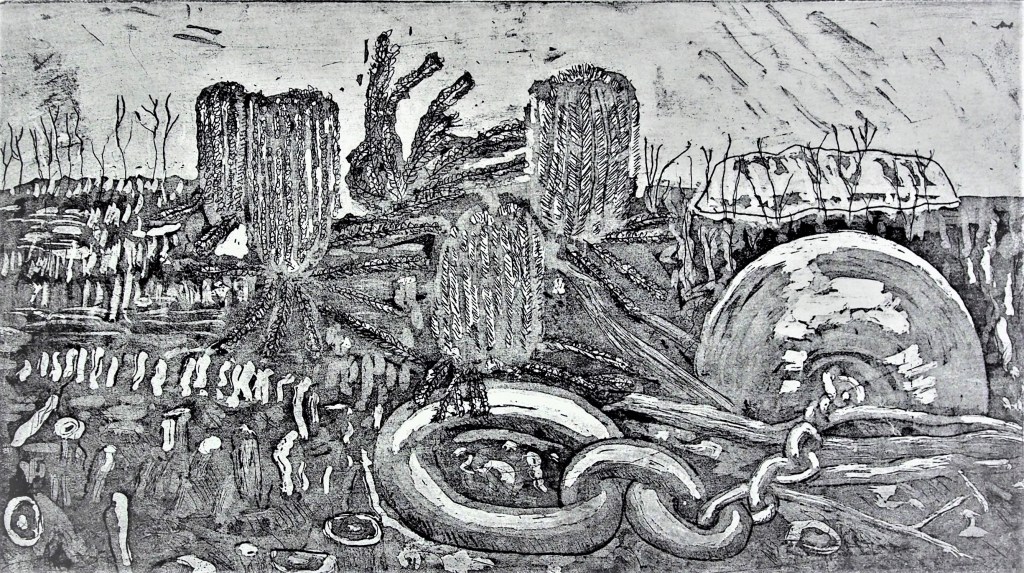
Early European settlers and visitors commented on the park-like appearance of much of eastern Australia which is now understood to have been the result of some sixty thousand years of Aboriginal land management. The settlers’ practices of widespread clearing have resulted in degradation of the soil, loss of species diversity and poor water retention.
 Alex Byrne Printmaker