
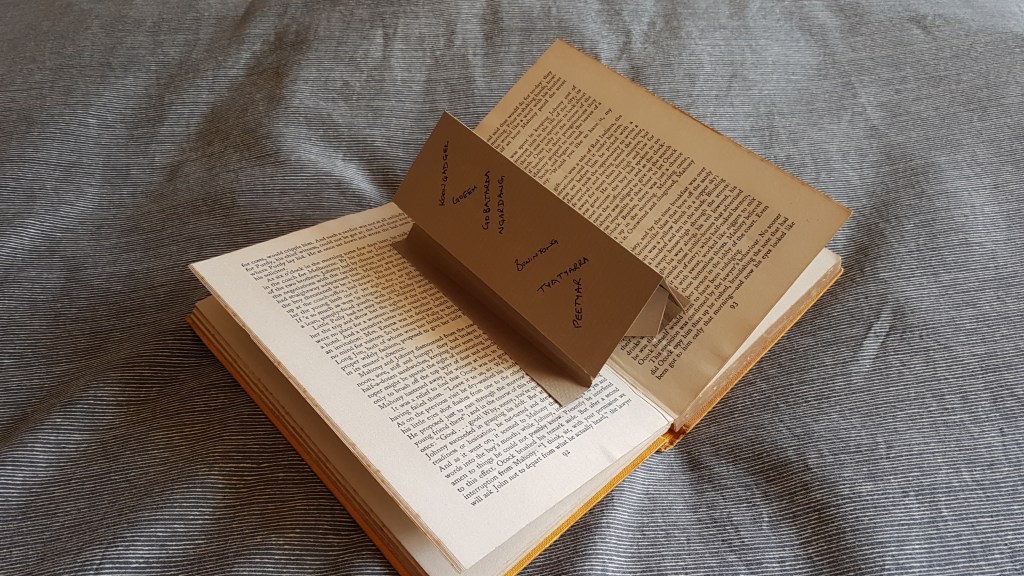
Australia Felix – Henry Handel Richardson (1917)
The first in the trilogy The Fortunes of Richard Mahony this novel introduces us to Richard Mahony, a doctor trained in Edinburgh who goes to Ballarat during the gold rush of the 1850’s to test his fortunes. After initial practice as a doctor, he is drawn to gold prospecting and later marries and returns to practice but is unhappy and decides to return to Britain. The novel is largely set in the Wathaurong of the Kulin Nation lands in central western Victoria. The words are taken from the Bruce Pascoe & Sharnthi Krishna-Pillay (2008) Dictionary of Wathawoorroong, Wathaurong Aboriginal Cooperative.

The boundary riders – Joan Phipson (1962)
Set in Wiradjuri country around the Abercrombie River, this adventure tells of the “mission” of three children who volunteer to ride the boundary line of their property. When they are finished in four days, they decide to use the remainder of the time to explore World’s End Falls. Young Bobby saves the group in a time of crisis. Floating out of this book are Wiradjuri words for the body and kin, remembering the people driven from these lands so that children could adventure. Language found in A new Wiradjuri dictionary compiled by Stan Grant and John Rudder (O’Connor, A.C.T.: Restoration House, c2010) and http://www.wiradjuri.dalang.com.au/plugin_wiki/wordlist.

A House is Built – M. Barnard Eldershaw (Marjorie Barnard & Flora Eldershaw) (1929)
This tragic novel centres tells of James Hyde and his family in early Sydney, Gadigal country. The house and business at the centre of the story occupy and marginalise the Gadigal. The words are taken from Jaclyn Troy (1993) The Sydney Language, Canberra, AIATSIS (available at http://www.dalang.com.au/Dharug/reference/troy_Sydney_language_publication.pdf, accessed 21 January 2018) and the Bayala language course offered at the 2018 Sydney Festival by Jacinta Tobin and Joel Davies.

Man-Shy – Frank Dalby Davison (1931)
Man-Shy tells the story of a young red heifer who flees the grazing herd for adventure on the open ranges. It has delighted generations of adults and children providing a myth of Terra Nullius for the invading settlers. The setting is imprecise but presumably around the Warrego where Davison took up a soldier settlement property for a time. The words are taken from the Gungarri Community (2017 draft, WordlistGunggari+Community+Wordlist+updateNov2017.pdf, accessed November 2019).
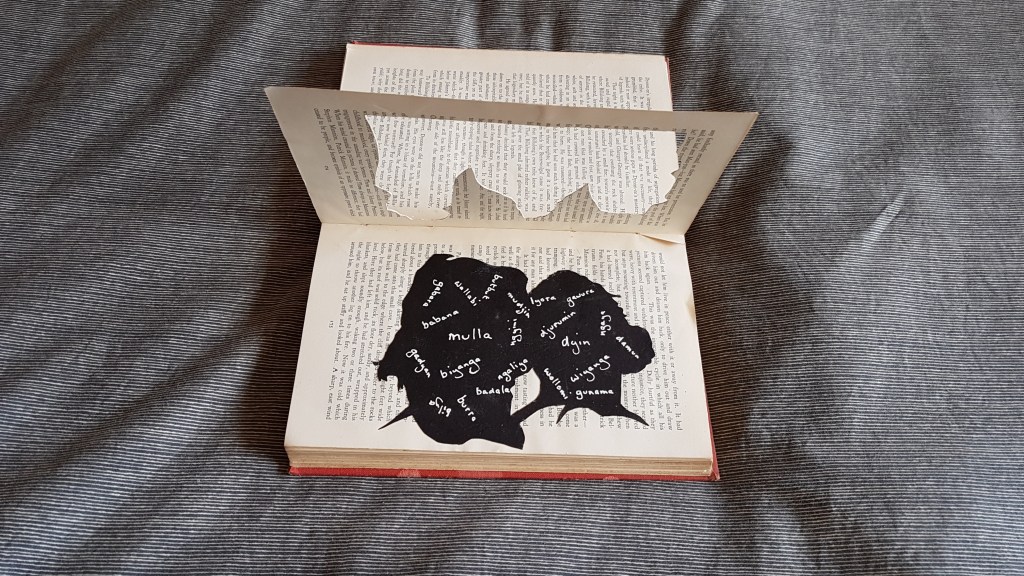
No barrier – Eleanor Dark (1953)
Book three of The Timeless Land trilogy parallels the growth of the Mannion family and the development of the settlement at Sydney Cove and the 1813 mapping of a route across the Blue Mountains to Wiradjuri country, removing the barrier to the expansion of the colonisers to the west. The words of Dharug of the western Sydney plain are taken from Jaclyn Troy (1993) The Sydney Language, Canberra, AIATSIS (available at http://www.dalang.com.au/Dharug/reference/troy_Sydney_language_publication.pdf, accessed 21 January 2018) and the Bayala language course offered at the 2018 Sydney Festival by Jacinta Tobin and Joel Davies.
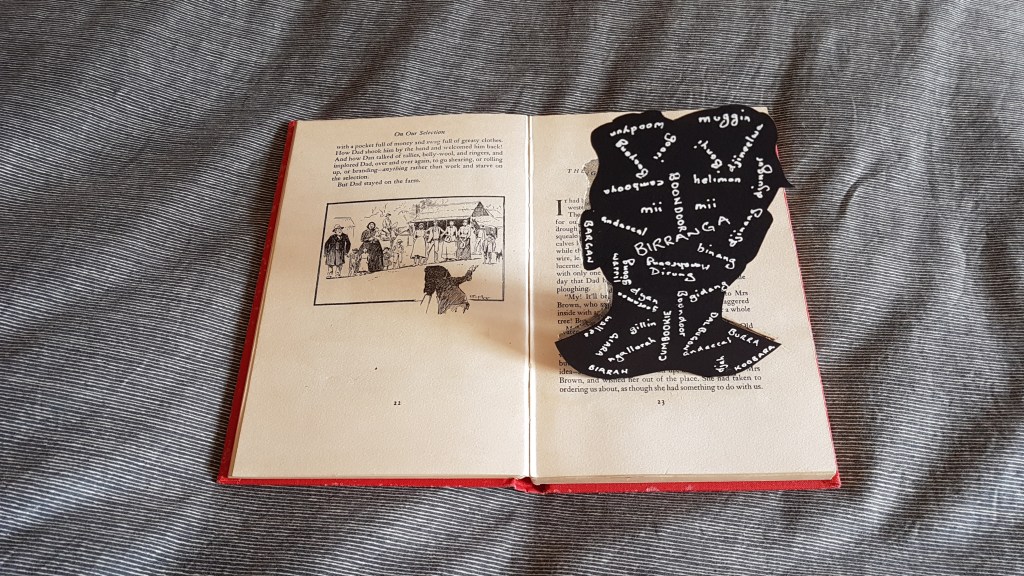
On our selection – Steele Rudd (Arthur Hoey Davis) (1899)
A bucolic collection of stories set in the late 1890s that features father and son “selectors” Dad and Dave Rudd. Their “free selection before survey” of crown land enabled rapid occupation of Aboriginal lands, in this case land of the Gomaingguru along the Condamine River around Toowoomba, Queensland where Steele Rudd and the supposed site of the ‘old selection’ at Drayton is still celebrated. Aboriginal people and their culture are not mentioned in the stories even though Rudd compiled his father’s memories of the brutal dispossession of the people of the Darling Downs (‘Recollections of Thomas Davis collected by Steele Rudd; in the possession of Hon. Joshua Thomas Bell circ. 1908-9’, transcription of original item, compiled and annotated by Richard Fotheringham, Fryer Library, University of Queensland, F3517, available at https://espace.library.uq.edu.au/data/UQ_216890/F3517.pdf accessed 19 January 2018). Giabul words are drawn from ‘Languages of the Condamine: Giabul Vocabulary’, Condamine Alliance, http://docs.wixstatic.com/ugd/311f09_d31dcbc978d0447cb0e8931b7b0433a2.pdf accessed 19 January 2018.
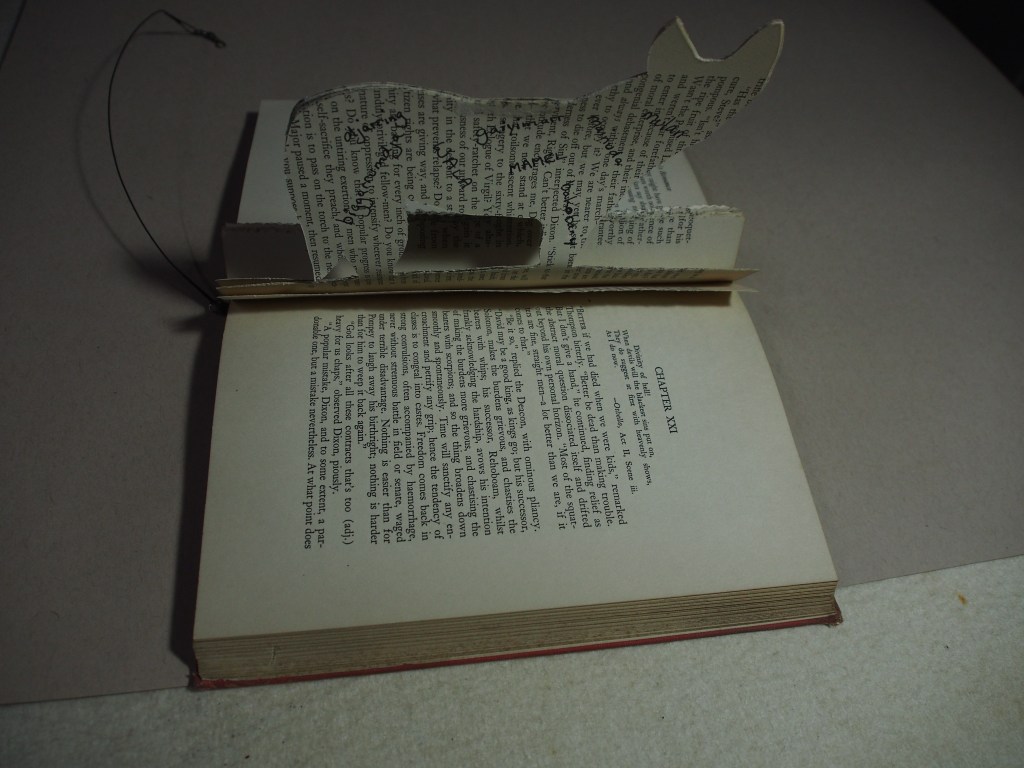
Rigby’s romance: a “Made in Australia” novel – Tom Collins (Joseph Furphy) (1921 – 1946 ed)
Tom Collins is travelling to Yooringa from Echuca to fulfill a contact on a cattle run. He also hopes to meet up with his old friend Jefferson Rigby. On the way he encounters Kate Vanderdecken, Rigby’s former sweetheart, who has travelled to Australia searching for him. The novel is an expanded and revised version of the fifth chapter of the original Such Is Life manuscript. The words are from the Yorta Yorta language and selected from The Yorta Yorta (Bangerang) Language of the Murray Goulburn including Yabula Yabula (Heather Bowe & Stephen Morey, Pacific Linguistics, Research School of Pacific and Asian Studies, The Australian National University, Canberra, 1999.
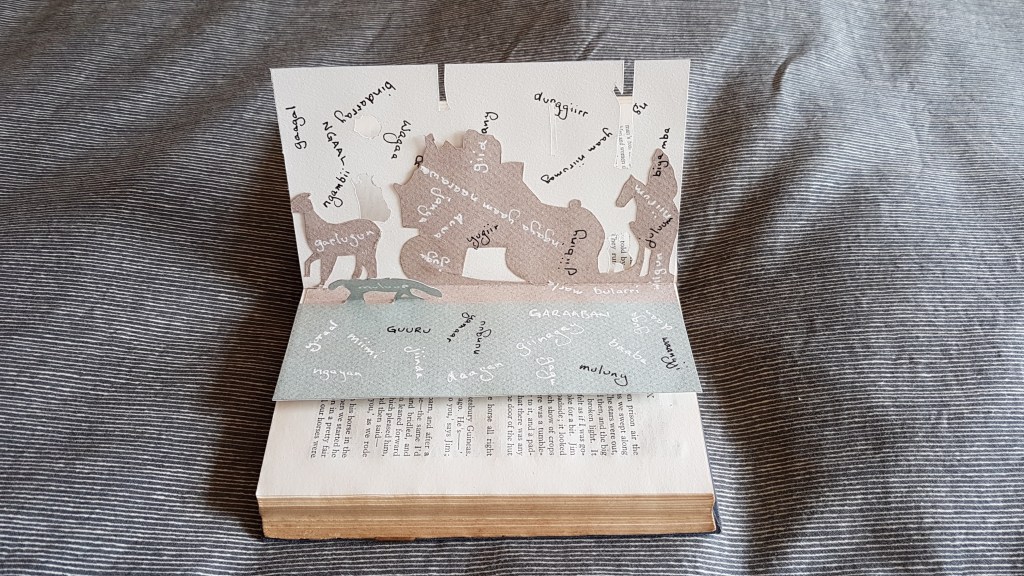
Robbery under arms; a story of life and adventure in the bush and in the Australian goldfields
– Rolf Boldrewood (Thomas Alexander Browne) (1888)
Related by bushranger Dick Marston as he awaits the gallows, the novel vividly evokes hisl turbulent years as cattleduffer and bushranger in company with his father Ben, brother Jim and the “honourable bushranger”, Captain Starlight. Captain Starlight’s Aboriginal ‘assistant’ features strongly in the novel but his origin and language are not identified. The settings moves through various districts of New South Wales including Turon in Wiradjuri country and the bushrangers’ hideout located near Guyra on the western edge of the land of the Gumbaynggirr whose words are drawn from ‘Gumbaynggirr language’ on the Our Languages website at http://ourlanguages.o rg.au/gumbaynggirr-language/ (accessed 30 January 2018).
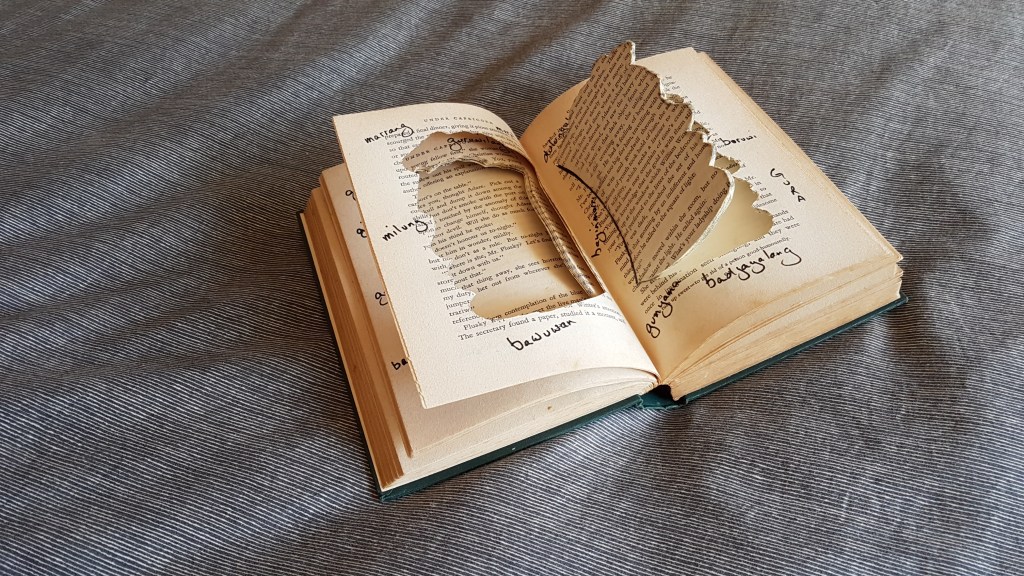
Under Capricorn – Helen Simpson (1937)
The book opens in Sydney at the time of the arrival of the new Governor, Sir Richard Bourke accompanied by Charles Adare, out to make his fortune and not particular about how he does it. Along the way he falls in love with a “currency lass”and trasacts with Flusky, a wealthy emancipated convict. In 1949 the novel was adapted into the film Under Capricorn starring Ingrid Bergman and Michael Wilding and directed by Alfred Hitchcock. It was also filmed in 1984 as a mini-series and continues to serve as a romantic tale of settler eccentricities, obscuring the dispossession of the original peoples. The words of are taken from Jaclyn Troy (1993) The Sydney Language, Canberra, AIATSIS (available at http://www.dalang.com.au/Dharug/reference/troy_Sydney_language_publication.pdf, accessed 21 January 2018) and the Bayala language course offered at the 2018 Sydney Festival by Jacinta Tobin and Joel Davies.
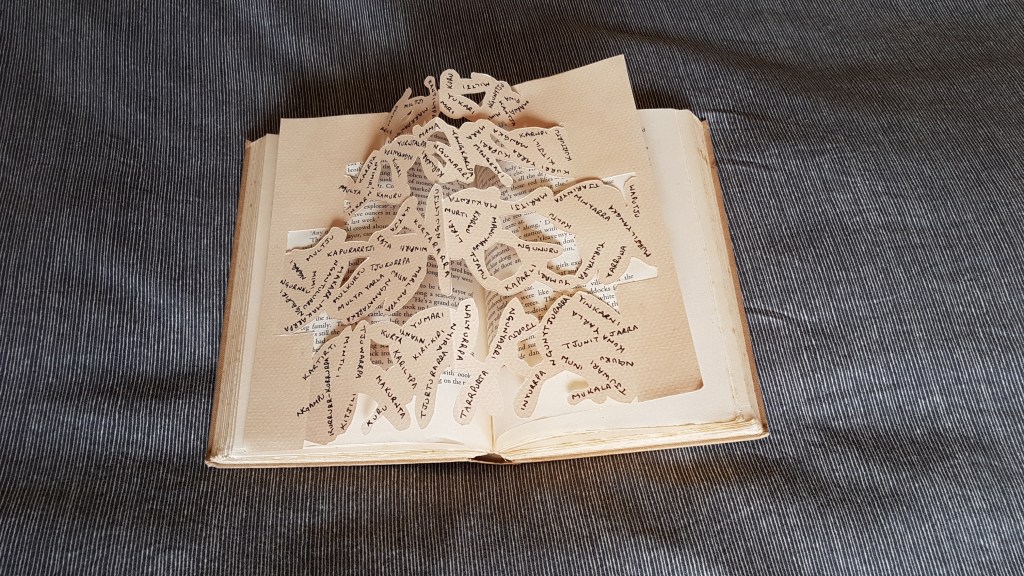
Winged seeds – Katharine Susannah Prichard (1950)
Set against the Great Depression and the gathering threat of war in Europe, this is the final novel in Prichard’s saga about the Gough family during the 1930s gold rush in Western Australia. The Aboriginal people of Kalgoorlie appear briefly and unusually are recorded as speaking and singing in language but are nevertheless marginal to the story. The escaping ‘winged seeds’, inserted just after that part, feature Western Desert Language words for relationships and parts of the body found in Douglas, W.H. (1988). An introductory dictionary of the Western Desert language. Perth, Australia: Institute of Applied Language Studies, Western Australian College of Advanced Education. (Made available online by Edith Cowan University at Research Online, http://ro.ecu.edu.au/ecuworks/7116 , accessed 5 January 2018).
 Alex Byrne Printmaker